
The Hidden Reality of Event Planning
Bridal magazines will show you the shimmer wall. They will show you the cheesecloth runners and the crystal candelabras. What they will not show you is the caterer’s van idling in Charlotte summer heat with food that has been sitting in the danger zone for three hours or the tent that wasn’t properly weighted before the thunderstorm rolled in from the mountains.
In my years as an Environmental Health Specialist and OSHA Compliance Officer, I learned that the most dangerous “pests” at any event aren’t always the visible ones. They are the invisible bacteria and logistical oversights that occur when style is prioritized over safety.
If you are planning a wedding, you deserve to know the risks that don’t make it into the inspiration boards. I am not here to scare you. I am here to make sure your celebration doesn’t end with a call to the health department — or worse.
Here are three critical areas where wedding safety most often takes a backseat to aesthetics and exactly how we handle them at DIY Bride Rentals.
1. The Handwashing Gap: A Bridge for Bacteria
A venue can have the most stunning view in Charlotte. If it lacks a dedicated, plumbed handwashing sink for the catering team — it is a red flag.
The science: Pathogens like Norovirus, E. coli, and Salmonella are transferred easily from hands to ready-to-eat foods (e.g. your appetizers, your grazing boards, your dessert table). Without a sink equipped with water at 100°F or above and single-use towels, drying with a reused rag or pantleg is not sufficient to protect your guests from what you cannot see.
What to ask your caterer: “Where will your team wash their hands during service? What is your handwashing protocol for outdoor or off-grid venues?”
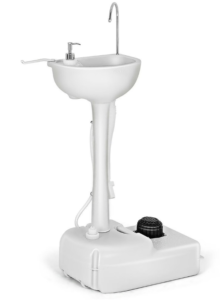
If they hesitate or say “We’ll use the venue restroom,” that is not good enough for a professional catering operation. A properly equipped catering team brings their own hygiene station to any event where plumbed access is limited.
What we do: When vetting vendors through the Inspector’s Lens, we verify hygiene access for every indoor and outdoor venue. For outdoor tent events or off-grid celebrations, we recommend portable, standing handwashing sinks — foot-pump operated units that require no electricity or hose hookup. You can find them at major retailers like Walmart, Home Depot, or Lowe’s for roughly $100. They come equipped with soap dispensers and hangers for single-use paper towels. This is not optional. It is a standard.
2. The 4-Hour Rule: Time & Temperature Control during Transport in the Charlotte Heat
Your wedding food begins its journey hours before you take your first bite. If your caterer is transporting dishes across town in August heat without professional-grade insulation — or if food is sitting on a buffet without a proper heat source — your guests’ guts may have a different memory of the day than you do.
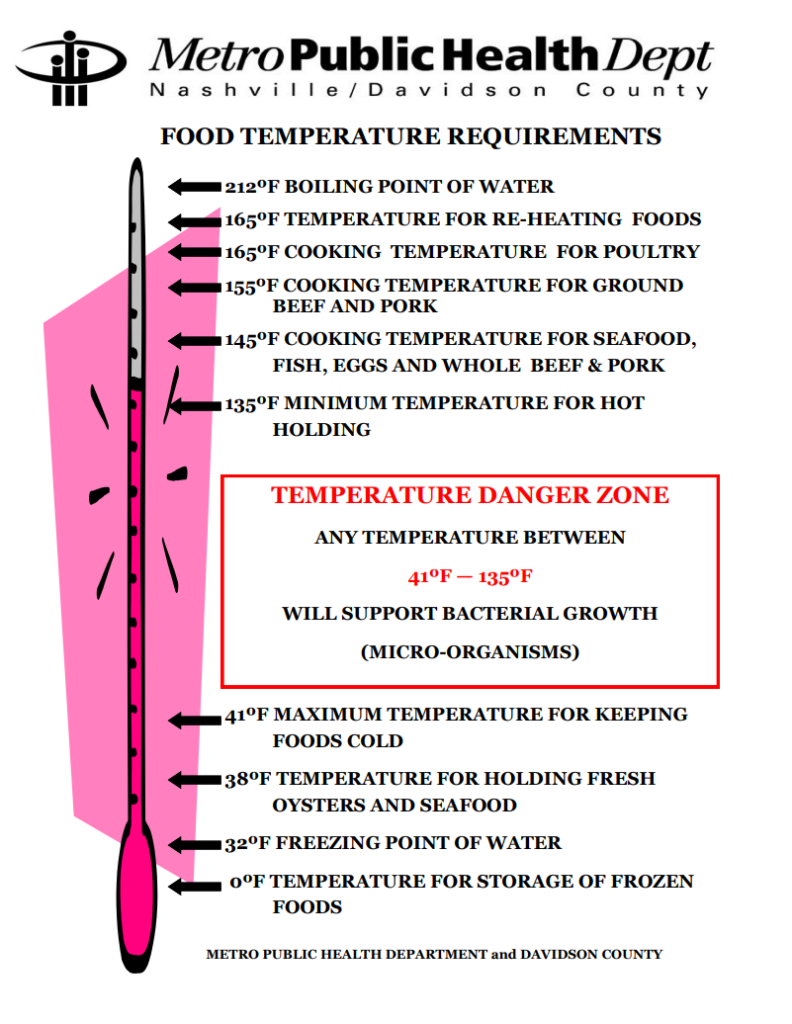
The science: Food held in the “Danger Zone” (between 41°F and 135°F) for more than four cumulative hours allows bacteria like Staphylococcus aureus and Clostridium perfringens to multiply to dangerous levels. The Charlotte summer heat is not a minor variable. It accelerates that timeline significantly for outdoor and semi-outdoor events.
The temperature standard: Keeping food “warm” is not enough. Any food intended to be served hot must be maintained at an internal temperature of 135°F or higher throughout service. Your caterer should be using professional-grade carriers for transport, and high-quality chafing dishes or electric warmers to maintain those temperatures from setup through the last plate.
The critical mistake most couples don’t know about: A warming tray is designed to hold food at temperature — not to reheat food that has already gone cold. If food drops below the safe threshold during service, it must be rapidly reheated to its full cooking temperature before being returned to the warmer. Many untrained teams skip this step entirely. The food looks fine. The guests have no way of knowing.
What to ask your caterer: “How do you transport hot food? What is your protocol if a dish drops below serving temperature during the event?” If they cannot answer specifically, you deserve a caterer who can.
What we do: For Blueprint and Dreamscape clients, vendor vetting through the Inspector’s Lens includes a review of catering protocols. We are not here to make your caterer feel interrogated. We are here to make sure every vendor at your event is operating to the professional standard your guests deserve.
For more information about proper cooking temperatures, check out the FDA’s guides for safe food handling and serving safe buffets. Here’s the handout I always kept in my inspection satchel for you to print and post on the door of your fridge:
3. Infrastructural Integrity: Look Up, Not Just around
As a former OSHA Compliance Officer, I don’t just review the floor plan. I look up.
High-end wedding style increasingly involves temporary structures — draped ceilings, floral chandeliers, arched installations, and tent structures. In a high-stakes environment, “temporary” must never mean “unstable.”
The structural risk: Tents, heavy draperies, and floral chandeliers are essentially massive sails and weights. If a tent is not properly weighted using concrete ballasts or deep-driven stakes, or if a hanging installation is not secured with load-bearing hardware rated for its actual weight — a sudden gust of wind or vibration from a crowded dance floor can turn a centerpiece into an emergency.
This is not a hypothetical. Tent collapses and falling décor cause injuries at events every year. The images never make it into the bridal magazines.
Fire compliance and life safety: A tent is technically a temporary building and must be treated as one. All tent fabrics should be NFPA 701 flame-retardant certified. “No Smoking” and “Exit” signage must be posted and illuminated as required by local fire codes. Floor plans must maintain clear, unobstructed exit paths. This means those beautiful draped panels and balloon arches need to be positioned with egress in mind, not just aesthetics.
Electrical load: Between DJ rigs, photo booths, catering warmers, and atmospheric lighting, the power draw at a wedding reception is substantial. Overloading aging venue circuits or running unsecured cables across a dance floor creates both fire risk and trip hazards. A qualified vendor maps power needs before the first cable is run.
What to ask your tent or structure vendor: “What is your anchoring protocol for this tent size? What is the wind load rating? Can I see the fire certification for the fabric?”
What we do: Every structure in The Stash including our pipe and drape setup and ceiling draping add-on installation is installed by our team according to safe rigging and load standards. We do not cut corners on structural safety because we understand, firsthand, what the consequences look like when someone else does.
Your Safety is Our Standard
At DIY Bride Rentals, we don’t just design beautiful spaces. We build a Circle of Support rooted in public health, professional safety, and the kind of radical transparency the wedding industry rarely offers.
Every piece of The Stash is commercially sanitized before every event. Every vendor we recommend has been reviewed through the Inspector’s Lens. Every structure we install is set up to load-bearing standards. not just to look good.
You shouldn’t need to hire a compliance officer to protect yourself on your wedding day. You just need to book with one.
Take the style quiz — or book a style call to talk through your specific venue and vendor setup with Zepher directly.
Zepher, Co-Founder and Event Planner, DIY Bride Rentals | Charlotte, NC | diybriderentals.com | Former Environmental Health Specialist, Metropolitan Nashville-Davidson County Government Former OSHA Compliance Officer, North Carolina